
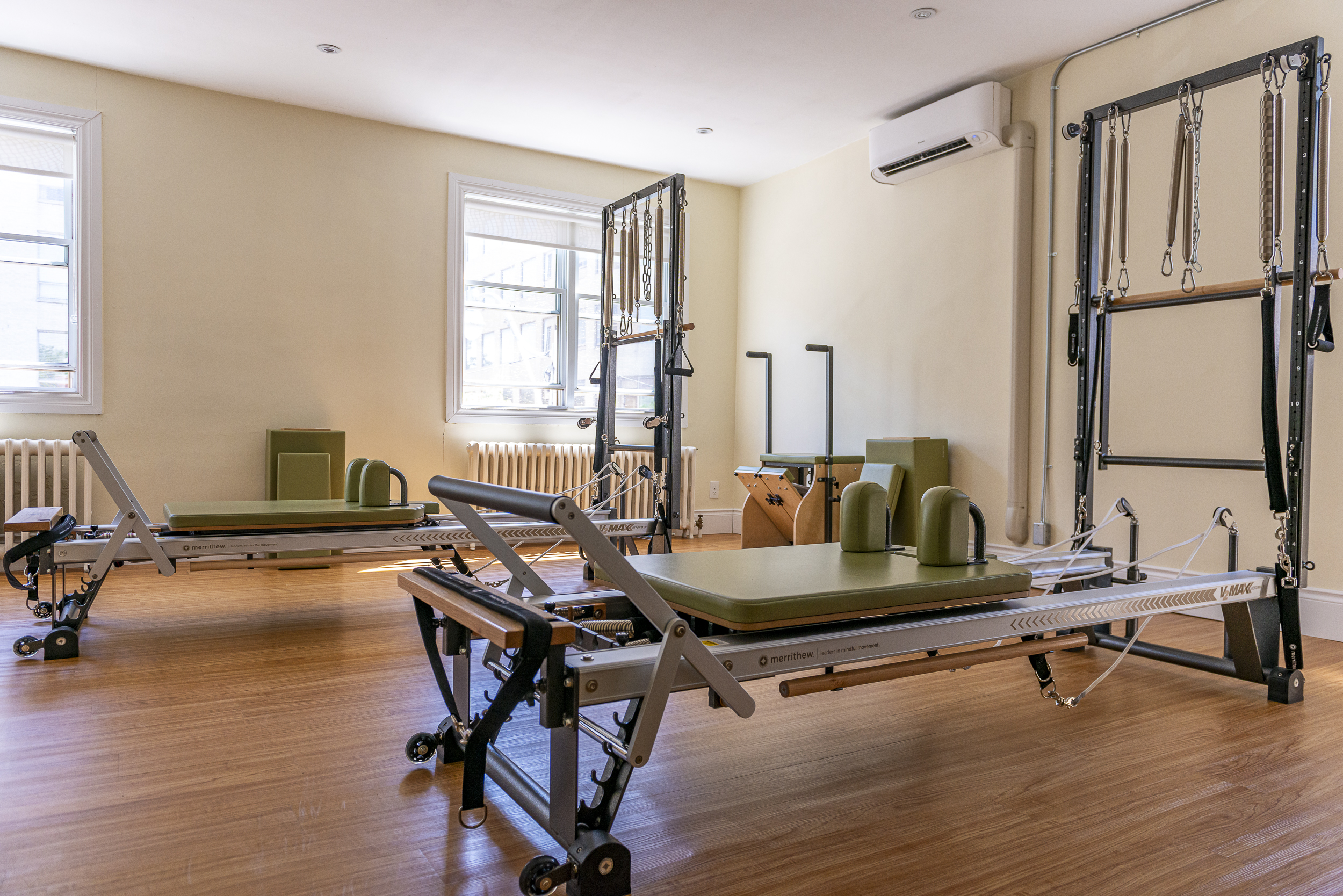
Strong introductory Pilates sessions are the backbone of any successful Pilates studio.
So it’s key that instructors know how to clearly convey to new clients why consistency and commitment in a Pilates practice matters.
When there’s a thoughtful and dynamic framework around introductory Pilates sessions new clients are retained and teaching skills get better; both are paramount to a studio reputation that is about quality Pilates and client-centric results that drive results.
But for new Pilates instructors fresh out of certification, new client introductory sessions can feel daunting.
What do you teach? When do you introduce it? How do you actually connect with someone you’ve just met?
Add to that the reality that every client walks in with a different goal; from someone chasing lean, aesthetic muscle to someone rebuilding hip or knee function after surgery, and it’s easy to feel overwhelmed.
As a studio owner and director, I mentor our new instructors to build sessions around adaptability.
This means be prepared, yes.
But be ready to pivot once you see how your client moves, feels and retains the movement you’re teaching.
Equally important are two simple principles that scaffold my new client sessions inspiring them to commit to Pilates, and our studio, long term:
- Include exercises that build confidence in what they can do
- Include exercises that reveal what they have the potential to do next.
When clients leave that first Pilates session feeling inspired AND successful, you’re creating momentum and excitement for what’s next.
Let’s break it down a bit more:
40%: I know I can
In those early sessions, we want to build movement confidence. Very often, new clients walk into a Pilates studio unsure of the method, of you and sometimes their own bodies and ability.
Engaging them with familiar movement and easy concepts can change that almost immediately.
But before they even step into the studio, gleaning insight from intake forms like the PAR-Q and health questionnaires can provide a snapshot of their movement history, habits and goals, providing you with the opportunity to meet them where they are.
Including exercises that are based on familiar patterns feels achievable. And motivates them to think, “Okay, I’ve got this.”
And when roughly 40% of the session feels accessible and successful, you’re building confidence that will motivate them to get into the studio again.
60%: I think I can
But if everything feels easy and familiar, then we risk them pondering “I can do all this, what’s the point in coming back?”.
Therefore, an even larger part of the session should explore their physical potential and introduce the possibility of what Pilates can do for them.
Challenging coordination and refining awareness by layering in precise cueing, better alignment, and new movement strategies will demonstrate the depth of a good Pilates foundation and the potential it has to build control, mobility and endurance.
And this is where your new client will start to feel the difference, not only in their bodies but in how they’re moving throughout daily life.
And ultimately, that’s what sells Pilates: moving better that translates into feeling better.
Structure that actually connects
For new instructors, it’s imperative to understand that programming a great introductory Pilates session isn’t just about what you teach; it’s about how you teach it.
Adults learn differently than children. So the traditional training model of direct instruction, where there is little collaboration and the instructor assumes full control, is often an ineffective way to connect with new clients.
If the session feels too one-sided, you’ll lose engagement. So as you plan your introductory sessions, think about structuring your workouts to include the following:
- Collaborative: They’re learning Pilates and you’re learning their movement abilities and skills – give and take within the session is a win-win. Encouraging them to share what feels good so you can build on those patterns is a solid way to integrate their experience.
- Self Directive: Help them connect the dots between Pilates exercises and sequences so the session feels purposeful and transferable to everyday activities.
- Autonomous: Their lived experience matters, regardless of their fitness background. Respect that.
And while movement assessment is essential, it’s only part of the picture.
Paying close attention to how your cues and corrections are landing, you’ll learn whether they’re connecting or creating confusion and frustration.
So if a client isn’t responding to a verbal cue, try a visual demonstration.
Or if the mat work isn’t connecting, pivot to the Pilates apparatus that provides the best feedback via spring resistance and position.
Because the best instructors, and consequently the best studios, are those that know how to sell Pilates through their Intro sessions by changing, adapting, regressing and being aware of the person in front of them.
By meeting your client at their level, guiding them to what the next level will be if they keep Pilates consistent and striking that balance between confidence and challenge, you’re not just delivering a good first Pilates session; you’re building a lasting client relationship.