
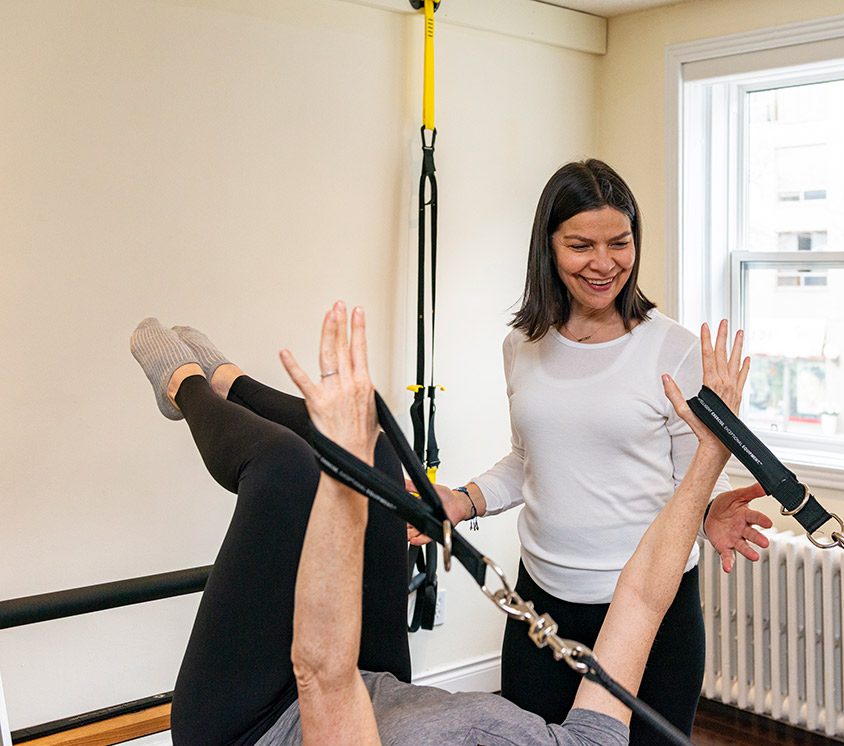
I don’t usually teach first-time clients, but after 30 years of teaching Pilates, I’ve learned that a first session is less about how much I can teach and more about how well I can understand the person in front of me.
I believe that Pilates can be the best type of exercise for most people who want to do it.
Therefore, the task at hand in that first session is to show my client why I believer this, without making it too challenging, or so overly detailed that they have no idea what I’m talking about or what we’re doing.
Sound familiar?
There are so many factors to consider in a first session: age, personality, health, fitness level, injuries. But one of the most important—and often overlooked—is understanding how someone learns.
How quickly do they pick up what I’m teaching? Can they embody the verbal cues and images I’m giving them? How do they respond to a new environment, new equipment and a new person?
Instructors often approach an introductory session with the mindset of What can I give you for the next 50–60 minutes?
I think it’s more useful to ask: What can we teach each other in this first session?
That shift changes how you observe, how you teach and ultimately how you program.
If a client is picking things up quickly and responding well to your cues, you can often challenge them more than you might initially expect. Perhaps a more complex variation, a little more detail around the breath, or some kneeling, standing or endurance-based work.
But if they aren’t responding to your teaching approach, adapt quickly.
Demonstrate more. Simplify your cues. Minimize corrections. Get them onto the equipment sooner, where the apparatus provides something external to organize their movement around. And perhaps leave the imagery for another day.
The environment matters, too.
Do they look visibly uncomfortable lying on their back? A new space, a new person and unfamiliar movement can leave some people feeling vulnerable or anxious; and anxiety doesn’t make learning easier.
Instead, start sitting or standing. Let them see the room and become familiar with you and the equipment. Give them an opportunity to develop a little comfort and confidence before asking them to lie down.
Once they understand that the Cadillac Trapeze isn’t going to pose any real threat, you can bring them back to the mat and begin exploring supine movement patterns.
A good first session is not simply about what the instructor can teach. It’s about learning how this particular person learns.
Paying attention and being adaptable are two of the most valuable skills a Pilates instructor can develop.
When we pay attention to how a client moves, learns and responds, and then adjust our teaching accordingly, we’re using our teaching energy more purposefully.
And the result is a more effective, more personal and ultimately more rewarding experience for both the client and instructor.